CTEC Professional Development Conference 2026
The East Midlands CTEC Professional Development Conference, hosted at Derby College’s Roundhouse campus on 1 July 2026, brought together construction educators, curriculum leaders and employer partners from across the CTEC partnership network for a full day of industry-led professional development, teaching and learning innovation, and collaborative practice sharing. The conference was specifically designed to strengthen the link between education and industry whilst supporting continuous professional development for construction teaching staff.
Attendance records from the conference sign-up documentation indicate that approximately 160 delegates participated in the specialist sessions throughout the day, representing a wide range of colleges across the East Midlands partnership.
Employer Panel Discussion: Shaping the Future Workforce
The conference commenced with a keynote employer panel led by Gary Hancox, focusing on “The Shape of the Industry and How We Can Impact This.” The discussion brought together leading industry representatives including:
- Sam Lewis – Greenhatch Group
- Stuart Hanlon – MDAR Ltd
- Adam Collishaw – Vaillant Group
- Alexandro Justin – CPWP
The panel explored the evolving needs of the construction industry and the increasingly important relationship between employers and education providers.
“Discussions centred on workforce shortages, future skills requirements, sustainability, technological innovation, employability behaviours, and how colleges and employers must work collaboratively to ensure learners are equipped with the skills required for a rapidly changing sector.”
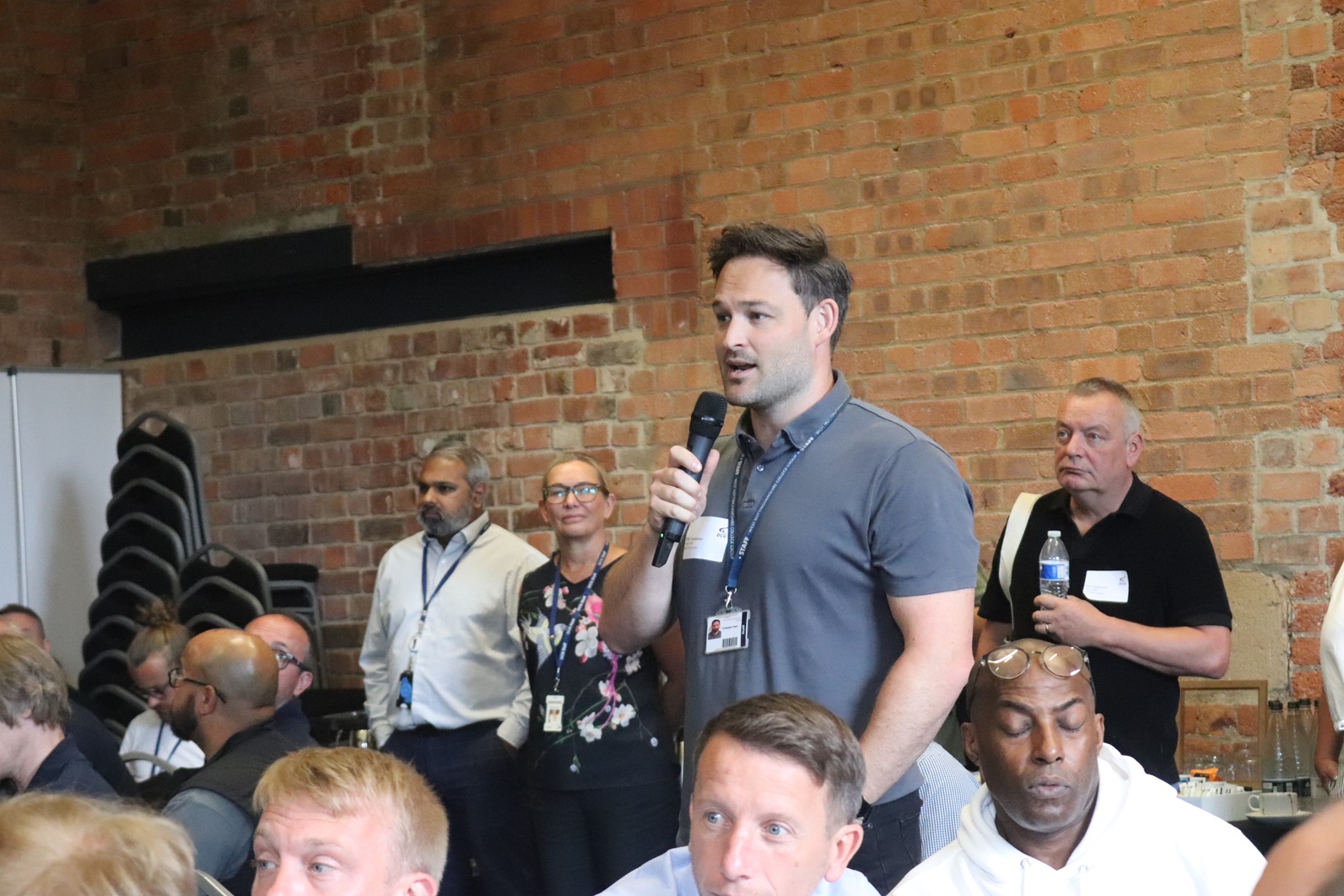
The session provided valuable industry insight and enabled delegates to engage directly with employers through a question-and-answer forum. A key theme emerging from the discussion was the need for stronger partnerships between industry and education to create a workforce that is adaptable, technically competent and prepared for future industry challenges.
Teaching and Learning Carousel: Sharing Innovation Across the Partnership.
Following the employer panel, delegates participated in a highly successful Teaching and Learning Carousel, which became one of the highlights of the day. This interactive format enabled staff from different colleges to rotate through a variety of short presentations and demonstrations, encouraging collaboration, discussion and the sharing of effective practice.
Featured sessions included:
- Sustainability within teaching and curriculum design
- Pedi-Postcards and strategies for supporting neurodiverse learners
- The use of Claude AI for resource creation and curriculum enhancement
- Sustainability and handling the “3 Ps” within construction
- “See It, Say It, Spell It” language development model
- Using LinkedIn to support personal and professional development in Electrical Installation
- Construction Hub @ Staveley – offsite live construction provision
- Effective questioning techniques
- Teacher Industry Exchange Programme
- Innovative teaching and learning approaches
The carousel generated significant professional dialogue, with delegates actively discussing implementation strategies and sharing examples from their own delivery contexts. Networking opportunities throughout the sessions enabled participants to establish new professional connections and identify collaborative opportunities beyond the conference. Feedback gathered informally throughout the day indicated that many delegates planned to adopt and adapt the approaches showcased to further enhance teaching, learning and assessment within their own institutions.
Industry-Led Professional Development
The afternoon industry-led professional development programme provided delegates with direct access to current industry knowledge, emerging technologies and future workforce expectations across a range of construction disciplines. Delivered by respected employer partners and subject specialists, the sessions ensured that educators were able to enhance their occupational competence and maintain currency within an evolving construction sector.
Across the programme, delegates explored modern methods of construction, digital technologies, building services engineering, low-carbon and sustainable practices, retrofit challenges, smart building controls, advanced finishing techniques, and contemporary industry standards. The sessions combined practical demonstrations, real-world case studies and discussions around future trends, enabling participants to gain valuable insight into how industry practices are changing and the implications this has for curriculum delivery.
A recurring theme throughout the afternoon was the importance of preparing learners for a rapidly evolving construction industry through the integration of emerging technologies, sustainable practices and employer-informed curriculum design. Delegates left with enhanced technical knowledge, a greater understanding of industry expectations, and practical ideas for embedding current and future industry practices into teaching, learning and assessment.
The industry-led programme was particularly successful in strengthening links between education and employers, ensuring that those responsible for delivering construction education remain informed, relevant and equipped to prepare learners for successful progression into employment. The knowledge gained will directly support curriculum innovation, improve the occupational currency of teaching staff and ultimately contribute to learners developing the skills, behaviours and competencies required by the modern construction workforce.
“The CTEC Professional Development Conference had a significant impact on strengthening collaboration between education and industry across the East Midlands CTEC partnership. Bringing together educators, curriculum leaders and employer representatives provided valuable opportunities to share best practice, discuss emerging industry needs and explore innovative approaches to teaching and learning.”
A key success of the event was the Teaching and Learning Carousel, which enabled delegates to exchange practical strategies relating to inclusive practice, sustainability, artificial intelligence, learner support and industry engagement. These sessions generated meaningful professional discussion and provided participants with ideas that can be applied immediately within their own teaching environments.
The employer panel reinforced the importance of strong partnerships between colleges and industry, offering valuable insight into future workforce requirements and the skills needed to prepare learners for successful employment within the construction sector
Industry-led CPD sessions enhanced delegates’ understanding of current and emerging practices across construction, including digital technologies, modern methods of construction, sustainability, retrofit, low-carbon systems and trade-specific innovations. This will support more current and industry-relevant curriculum delivery across partner organisations.
Perhaps most importantly, the conference strengthened professional networks across the partnership, creating opportunities for ongoing collaboration, resource sharing and continuous improvement. The knowledge, ideas and relationships developed throughout the day will continue to support curriculum innovation and enhance learner outcomes across the region.


